This information is over 2 years old. Information was current at time of publication.

Data Management Planning: Storage, Backup, and Security, Part 3

Are you taking the appropriate steps to store, backup, and secure your data files? Does your research group have formal policies in place that are detailed in your data management plan? If you answered no, or maybe…read on!

The lifespan of storage media such as servers, hard drives, CD/DVDs, and flash drives varies depending on the use, location, and maintenance of the media. It is important to know the limitations, lifespan, and maintenance needs of the selected media. Don’t forget—all media, no matter how reliable, must be backed up. Creation of multiple backups and use of off-site storage provide the best protection. Consider whether to back up particular files or the entire computer system, the frequency needed, data backup location (i.e., off-site server), and persons responsible.

If you do not have the staff or expertise to implement a data management plan, consider consulting with one of these University of Pittsburgh departments: Computing Services and Systems Development (CSSD), the Center for Research on Health Care (CRHC) Data Center, Epidemiology Data Center, or the Pittsburgh Supercomputing Center (fees may apply).

Are all of the members in your lab using a consistent file naming convention to increase efficiency? The contents of data files should be described in brief but meaningful ways for quick retrieval. Other tips:

  • Avoid symbols such as “  /  \  :  *  ?  ”  <  >  #  [  ]  &  $ in file names.
  • Do not use spaces to separate words.
  • Follow the date format recommended by ISO 8601: YYYY-MM-DD.
  • When using sequential numbering, make sure to use leading zeros so files stay in order when sorting by file name (i.e., RatajeskiSurvey01).

Finally, safeguard the integrity of your data by restricting access to sensitive data. Each computer in your lab should have updated anti-virus protection, firewalls, and intrusion detection in place, especially if your system is connected to the Internet. Do not store confidential data on servers or computers connected to an external network or send personal or confidential data via e-mail. Safeguard your physical space as well. Control access to rooms and computers where data is stored and log the removal of, and access to, media or hardcopy material.

More information about sensitive data, security, and backing up your data, is available at technology.pitt.edu/security.html.

Part 1 of this series appeared in the February 2013 HSLS Update and explored various aspects of data management planning; while Part 2, in the March 2013 issue, examined metadata.

~ Melissa Ratajeski
This information is over 2 years old. Information was current at time of publication.

Practice and Record Your Presentation in Falk Library’s Group Study Room E

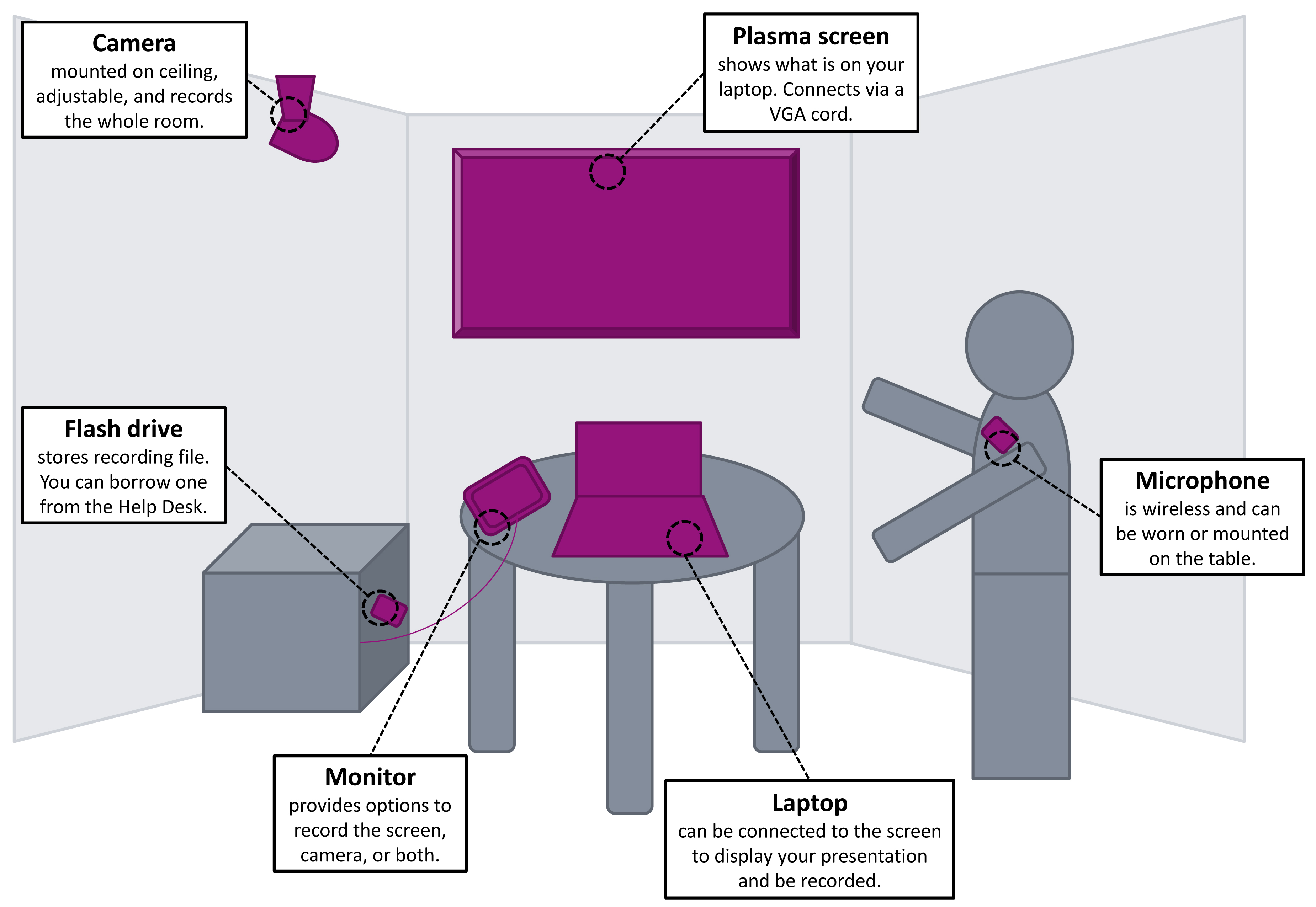
Do you need to improve your presentation skills? Falk Library’s Group Study Room E is now equipped with the latest technology to help you practice your presentations. The new media console allows you to videotape yourself giving a presentation as well as record your onscreen presentation from your laptop. Saving the video files to a flash drive allows you to take your video presentation with you for review.

The following diagram of Group Study Room E provides an overview of the room setup and recording options:

GSR Recording EquipmentGroup Study Room E can be reserved for video recording purposes up to three days in advance. Advance registrations must be made in person at the Technology Help Desk or by calling 412-648-9109. At 10 a.m. on the current day, the room can be reserved online or in person on a first-come, first-served basis. Individuals or groups of up to four people can book Group Study Room E for up to four hours.

Before using the room, you must first go to the Technology Help Desk to check out the room key and wireless microphones. Laptops and high-capacity flash drives are also available for check out. A valid Pitt ID is required in order to borrow these items. For more information, please review the Group Study Room policies.

The video system is designed to be user-friendly and easy to follow. You have the option to record just the camera or the laptop, a split-screen of both the camera and laptop, or a picture-in-picture with the camera in the corner. Video files are saved in .ts format to a flash drive and can be played using VLC player. Please see the step-by-step instructions in the room to guide you through the recording options.

For additional assistance, please contact the Technology Help Desk.

~ Julia Jankovic

This information is over 2 years old. Information was current at time of publication.

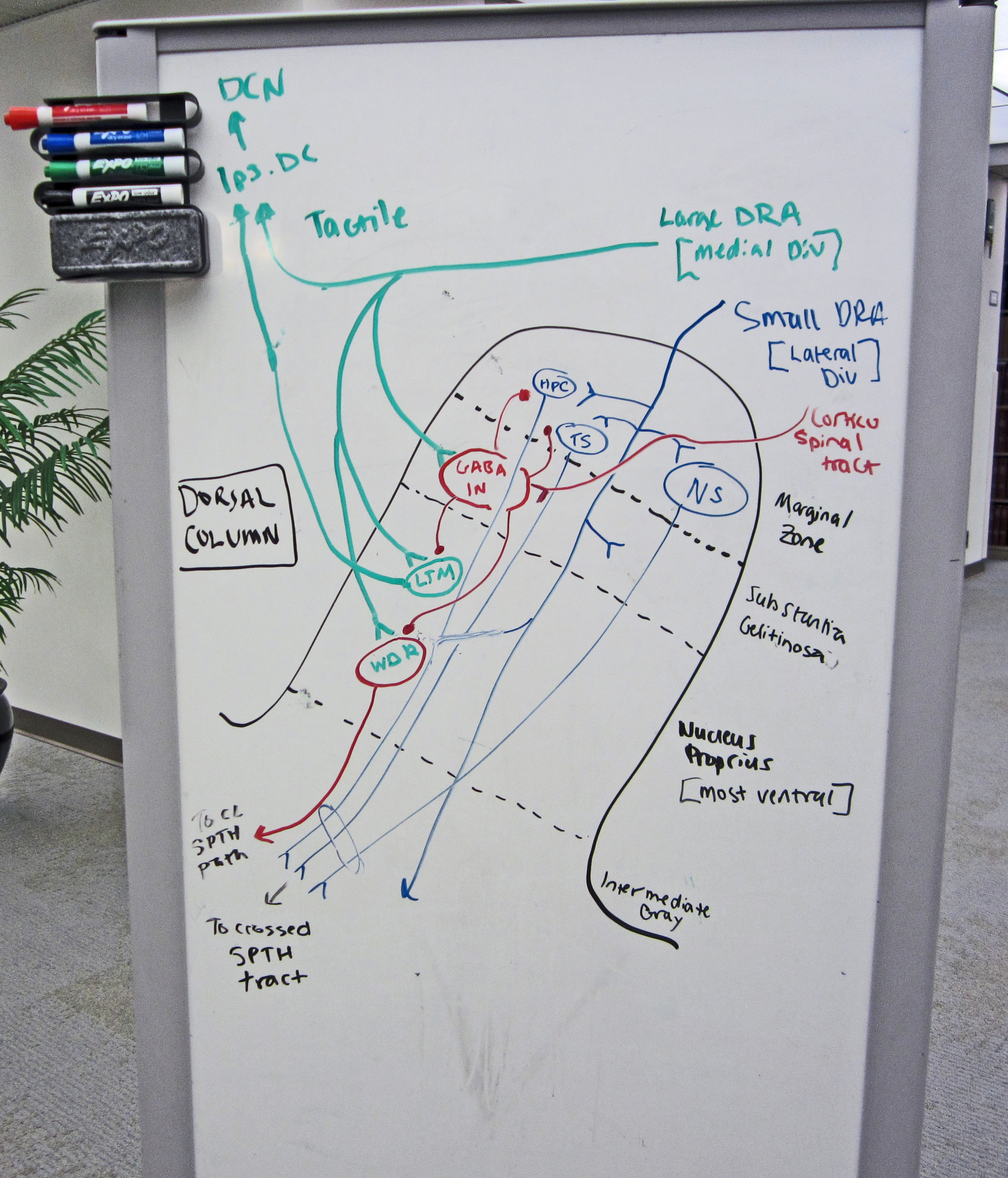
New Rolling Whiteboards

Take notes, solve problems, or plan a project!

We’ve purchased new rolling whiteboards that are currently available on the library’s upper floor. Please feel free to move them anywhere in the library you want to work. Use them to work with classmates or by yourself—to draw diagrams, solve equations, outline projects, or use them to provide a walled off study space. When you’re finished, erase your work and leave the whiteboard for the next person.

You’ll find whiteboard dry erase markers and an eraser attached to each board.

If you have any questions, please Continue reading

This information is over 2 years old. Information was current at time of publication. This information is over 2 years old. Information was current at time of publication.

HSLS Staff News

News

Jonathon Erlen, history of medicine librarian, was appointed to the American Osler Society’s Executive Board for a three-year term.

Andrea Ketchum, reference librarian, was appointed to the Medical Library Association’s Scholarly Communication Committee for a three-year term.

Presentations

Kate Flewelling, outreach coordinator, NN/LM Middle Atlantic Region, and C. Bohn1, presented a poster titled “Online Resources to Support Public Health Promotion” at the New York State Public Health Association annual meeting, in Troy, NY, on April 25, 2013.

1. New York State Council on Children and Families, Rensselaer, NY.

Michele Klein-Fedyshin, reference librarian, presented a poster titled “Translating Evidence into Practice at the End-of-Life: Information Access, Needs, and Usage by Hospice and Palliative Nurses” at the Eastern Nursing Research Society, in Boston, MA, on April 18, 2013. This project was funded by the NN/LM Middle Atlantic Region.

This information is over 2 years old. Information was current at time of publication.

May Classes

HSLS offers classes on database searching, software applications such as Adobe Photoshop, bibliographic management, molecular biology and genetics, and library orientations. For more information, visit the online course descriptions.

Classes are held on the first floor of Falk Library (200 Scaife Hall) in Classroom 1 and on the upper floor of the library in Classroom 2. All classes are open to faculty, staff and students of the schools of the health sciences at the University of Pittsburgh. They are also open to UPMC residents and fellows.

No registration is required for any of these classes. Seating for classes is first-come, first-served, until the class is full. Classes marked with an asterisk (*) qualify for American Medical Association Category 2 continuing education credit.

Class schedules are subject to change. Please consult the online class calendar for the most current information.

Faculty, staff and students of the schools of the health sciences will need a valid Pitt ID or e-mail account to attend these classes. UPMC residents/fellows will need to show their UPMC IDs.


HSLS ORIENTATION

Introduction to HSLS Resources and Services at Falk Library
(Meet inside entrance to Library)
Offered upon request to groups or individuals. Call 412-648-8866.


SEARCHING DATABASES

Painless PubMed* (Falk Library Classroom 1)

Tuesday, May 7 noon-1 p.m.
Monday, May 13 4-5 p.m.
Wednesday, May 22 10:30-11:30 a.m.
Thursday, May 30 11 a.m.-noon

Testing Beyond the Laboratory: Finding Testing Instruments Used in Research and Clinical Settings* (Falk Library Classroom 1)

Thursday, May 9 1-2 p.m.


MOLECULAR BIOLOGY AND GENETICS RESOURCES

SNPs & Genetic Variation* (Falk Library Classroom 2)

Wednesday, May 15 1-3 p.m.

Gene Regulation Resources* (Falk Library Classroom 2)

Wednesday, May 29 1-3 p.m.


SOFTWARE TRAINING

Adobe Photoshop (Falk Library Classroom 2)

Tuesday, May 14 12:30-2:30 p.m.

EndNote Basics (Falk Library Classroom 2)

Thursday, May 30 2:30-4:30 p.m.

PowerPoint for Conference Posters (Falk Library Classroom 2)

Tuesday, May 21 12:30-2:30 p.m.


CUSTOMIZED CLASSES

Customized classes can be developed for your department, course, or other group.


This information is over 2 years old. Information was current at time of publication.

CLC Genomics Workbench—Analyze, Compare, and Visualize Next Generation Sequencing Data

CLC GenomicsAttention University of Pittsburgh and UPMC researchers: The HSLS Molecular Biology Information Service is pleased to announce the availability of unlimited licenses for CLC Genomics Workbench from CLC bio. This resource is a comprehensive and user-friendly cross-platform desktop application for analyzing, comparing, and visualizing next generation sequencing (NGS) data. CLC Genomics Workbench supports not only genomics analyses, but also transcriptomics, epigenomics, and classical sequence analyses. Funding for CLC Genomics Workbench is provided by the University of Pittsburgh’s Institute for Personalized Medicine.

Product features include: Continue reading

This information is over 2 years old. Information was current at time of publication.

Director’s Reflections…Public Access News

Barbara EpsteinThose interested in scholarly communication and public access will be encouraged to learn about two important federal initiatives, one from Congress and one from the White House.

On the legislative front, our own Representative Mike Doyle is a co-sponsor of the bipartisan Fair Access to Science and Technology Research Act (FASTR), introduced in the House as HR 708 and in the Senate as S 350. If passed, FASTR, based on the NIH Public Access Policy, would require government agencies with annual extramural research expenditures of more than $100 million to make electronic manuscripts of peer-reviewed journal articles based on their research freely available on the Internet within six months of publication in a peer-reviewed journal. The manuscripts would be preserved in a digital archive maintained either by the agency or in another suitable repository that permits free public access, interoperability, and long-term preservation. Continue reading

This information is over 2 years old. Information was current at time of publication. This information is over 2 years old. Information was current at time of publication.

HSLS Librarian Participates as a Member of an International Systematic Review Team

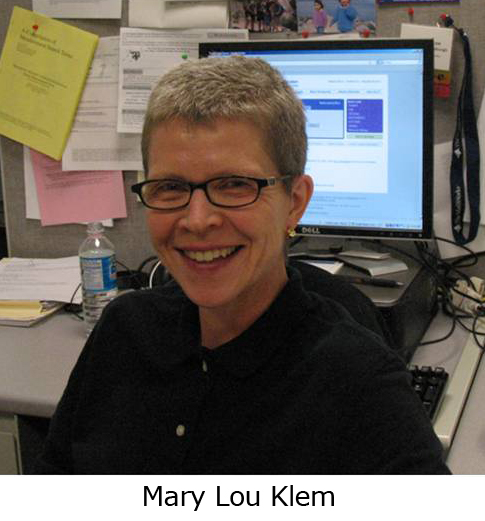
Mary Lou Klem

Reference Librarian Mary Lou Klem, PhD, recently attended a meeting in Geneva, Switzerland as a member of a research team developing a series of systematic reviews. The team, funded by the Brocher Foundation, is an interdisciplinary group of health care researchers from the United States and Europe, including faculty from the University of Pittsburgh School of Nursing; Northwestern University Feinberg School of Medicine; University of Basel Institute of Nursing Science; KU Leuven Center for Health Services and Nursing Research; Azienda Ospedaliero-Universitaria Pisana; Kantonsspital St. Gallen, Switzerland; and Hannover Medical School. The goal of the group is to complete a series of systematic reviews and meta-analyses examining the relationships between selected psychosocial factors and clinical outcomes after solid organ transplantation. Continue reading

This information is over 2 years old. Information was current at time of publication.

Cool Learning Tool: Flashcard Exchange

Flashcard Exchange is one of many free tools available to help you study. The idea is based on the principles of repetition and memorization.

You can create your own set of flashcards or use one of the many sets of flashcards made by other students.

FlashCards search

There are 48 subject areas listed under the “Browse By Subject” Medical heading, including pharmacology, hematology, and USMLE. For any of these subject areas there are hundreds of flashcard sets available. Once you select a set of flashcards, you can view the front or back or both together. There is also a memorize and test feature with each set. Continue reading

This information is over 2 years old. Information was current at time of publication.

Treasures from the Rare Book Room: Bertuccio’s Art of Medicine

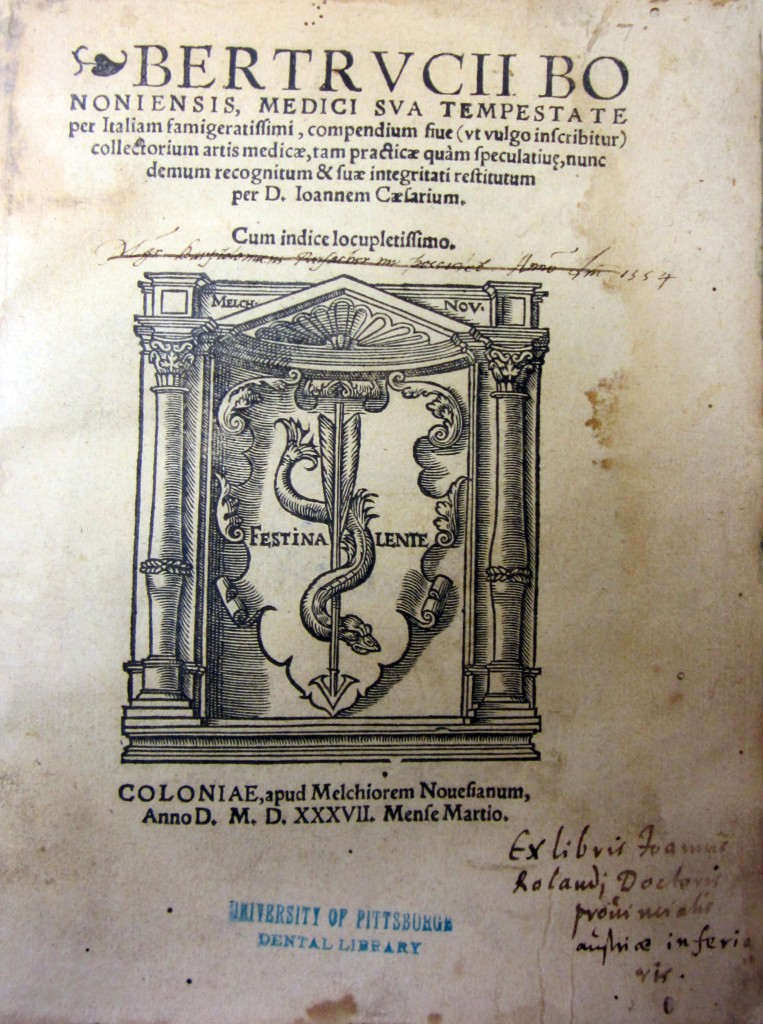
Art of Medicine title pageLittle is known about Nicola Bertuccio (d. 1347), the author of the Compendium sive (ut vulgo inscribitur) Collectorium artis medicae, published in 1537. He was associated with the University of Bologna, a center in medieval Europe for the study of medicine, where dissection began to be practiced around 1300. Following the research of his teacher and predecessor, Mondino de Liuzzi, Bertuccio contributed to the revival of anatomical studies. His teachings attracted Guy de Chauliac, the author of a seminal work in surgery, Inventarium sive Chirurgia Magna, to come to Bologna to study surgical techniques.
Though his life remains undocumented, his work has left a permanent mark on the study of medicine. Bertuccio was an authority in surgery, but in practice he preferred nonsurgical procedures. His most notable writing was a systematic collection of diseases and treatments. For each ailment he discussed etiologic factors, gave the rational and empirical treatment, described the symptoms, and provided his prognosis for recovery. There is one chapter on anatomy which includes a description of the brain.

This work was very influential and remained in demand long after his death. In the 16th century, four editions were published. Even today, it has ignited the interest of researchers and become a prime example of a treatise containing medical precautions for physician conduct.1

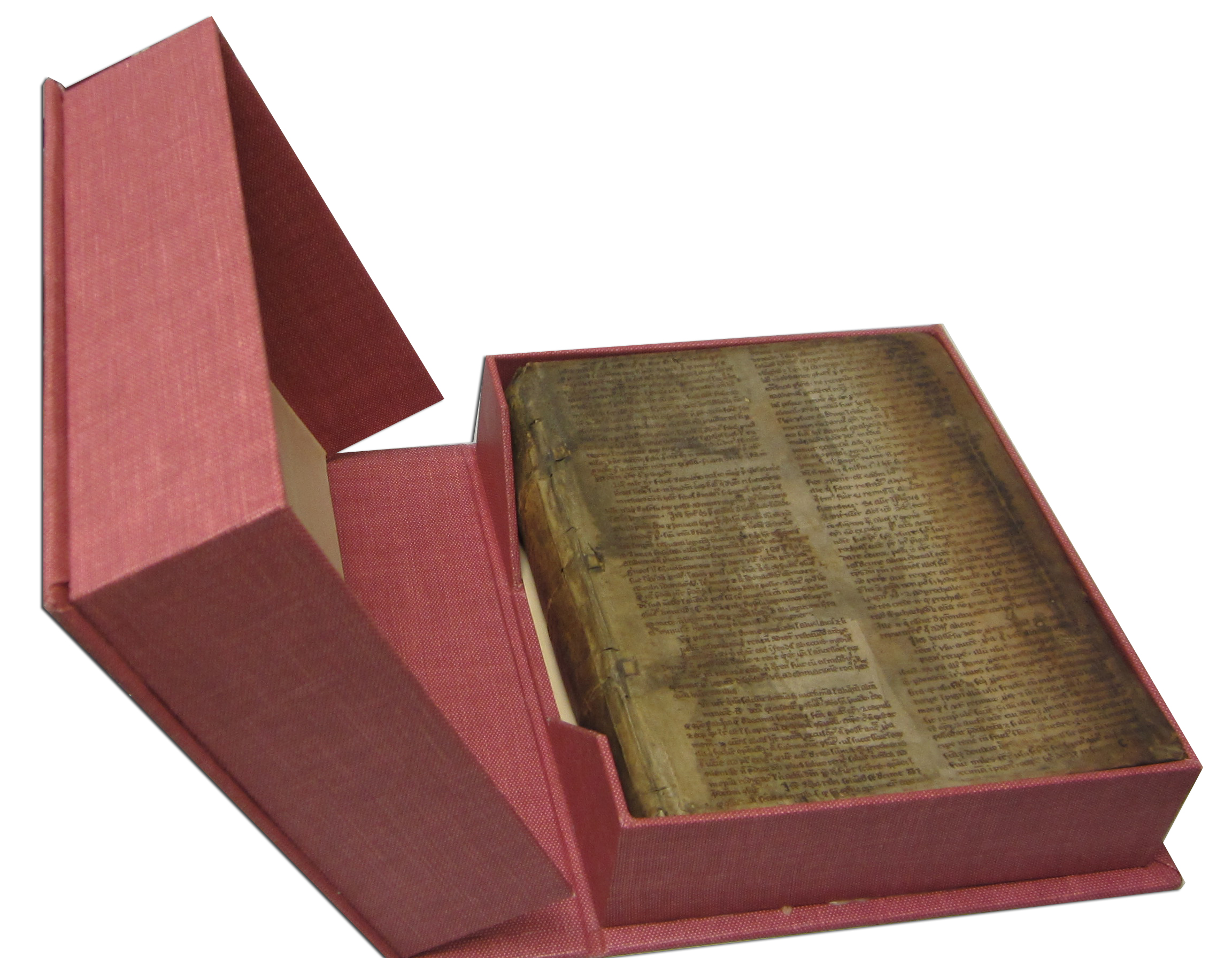
Art of Medicine coverThe copy in Falk Library has vellum binding covered with old Latin writing. It was a common practice of the past to reuse old manuscript pages for binding since vellum was expensive.

The exact provenance is not easy to establish, but the copy bears handwritten notes in Latin of an early owner, physician Johann Roland. At some point it belonged to a convent library in Vienna. It was acquired by the University of Pittsburgh Dental School Library in 1929. From there it was transferred to Falk Library.

The book can be viewed in the Rare Book Room by appointment.

1. Žalud, Zdeněk. “Velmi nám pomáhá, že naši mluvě nerozumějí: sugestivní a manipulativní prvky v chování středověkého lékaře” [It is very helpful that they do not understand our language: suggestive and manipulative elements in behavior of medieval physicians]. Kontakt 14, no. 4 (2012), 475-484, http://casopis-zsfju.zsf.jcu.cz/kontakt/administrace/clankyfile/20121214131342225654.pdf.

~ Gosia Fort

This information is over 2 years old. Information was current at time of publication.

HSLS Staff News

News

Carrie Iwema, Molecular Biology Service information specialist, earned Senior Member status in the Medical Library Association’s (MLA) Academy of Health Information Professionals and was appointed to MLA’s Continuing Education Committee for a three-year term.

Presentations

Gosia Fort, head of Digital Resource Development, presented “Medical and Scientific Medals in the Falk Library Collection,” at The Western Pennsylvania Numismatic Society, in Pittsburgh, PA, on February 5, 2013.

Melissa Ratajeski, reference librarian, presented “Answering the ‘Why Questions’ of Research Data Management,” as an NN/LM Middle Atlantic Region Boost Box Webinar on March 12, 2013.

Publications

Jonathon Erlen, history of medicine librarian, served as a major contributor to ISIS Current Bibliography of the History of Science and Its Cultural Influences 2011. Chicago: University of Chicago Press, 2012.

Charlie Wessel, head of Research and Reference Initiatives, along with co-authors A.F. Chen1 and N. Rao1, published “Staphylococcus Aureus Screening and Decolonization in Orthopaedic Surgery and Reduction of Surgical Site Infections,” in Clinical Orthopaedics and Related Research, 2013 Mar 6. Also acknowledged was HSLS reference librarian Melissa Ratajeski for her assistance with the bibliographic file management software.

1. Department of Orthopaedic Surgery, University of Pittsburgh.

This information is over 2 years old. Information was current at time of publication.

April Classes

HSLS offers classes on database searching, software applications such as Adobe Photoshop, bibliographic management, molecular biology and genetics, and library orientations. For more information, visit the online course descriptions.

Classes are held on the first floor of Falk Library (200 Scaife Hall) in Classroom 1 and on the upper floor of the library in Classroom 2. All classes are open to faculty, staff and students of the schools of the health sciences at the University of Pittsburgh. They are also open to UPMC residents and fellows.

No registration is required for any of these classes. Seating for classes is first-come, first-served, until the class is full. Classes marked with an asterisk (*) qualify for American Medical Association Category 2 continuing education credit.

Class schedules are subject to change. Please consult the online class calendar for the most current information.

Faculty, staff and students of the schools of the health sciences will need a valid Pitt ID or e-mail account to attend these classes. UPMC residents/fellows will need to show their UPMC IDs.


HSLS ORIENTATION

Introduction to HSLS Resources and Services at Falk Library
(Meet inside entrance to Library)
Offered upon request to groups or individuals. Call 412-648-8866.


SEARCHING DATABASES

Painless PubMed* (Falk Library Classroom 1)

Friday, April 5 3:30-4:30 p.m.
Thursday, April 11 1-2 p.m.
Wednesday, April 17 9-10 a.m.
Tuesday, April 23 noon-1 p.m.

Focus on Behavioral Medicine: Searching PsycINFO* (Falk Library Classroom 1)

Thursday, April 4 10:30 a.m.-noon


MOLECULAR BIOLOGY AND GENETICS RESOURCES

Pathway Analysis Tools 1* (Falk Library Classroom 2)

Wednesday, April 3 1-3 p.m.

Primer Design & Restriction Analysis* (Falk Library Classroom 2)

Wednesday, April 10 1-3 p.m.

Pathway Analysis Tools 2* (Falk Library Classroom 2)

Wednesday, April 17 1-3 p.m.


SOFTWARE TRAINING

Adobe Photoshop (Falk Library Classroom 2)

Tuesday, April 2 1-3 p.m.

EndNote Basics (Falk Library Classroom 2)

Friday, April 19 9-11 a.m.

PowerPoint for Conference Posters (Falk Library Classroom 2)

Monday, April 8 noon-2 p.m.


CUSTOMIZED CLASSES

Customized classes can be developed for your department, course, or other group.