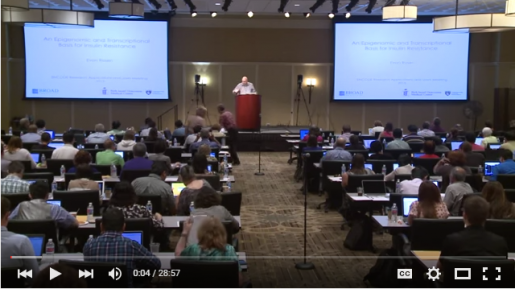
To be clear, GenomeTV is not actually television. Rather, it is a YouTube Channel for the National Human Genome Research Institute (NHGRI), a part of the National Institutes of Health (NIH). This collection of video resources about genetics and genomics is arranged into six broad categories, with content dating back to the human genome announcement at the White House in 2000. When available, PowerPoint slides accompany the videos.
Content includes:
- Workshops and Meetings: recordings of NHGRI/NIH scientific workshops/meetings exploring data and policy issues, clinical approaches, and the latest research.
- Symposia: playlists from specialized sessions covering the research and accomplishments of specific NHGRI programs.
- Education and Training: a variety of tutorials and education resources dedicated to informing students, teachers, researchers, and the public.
- Lectures: individual and series of lectures intended to share current genetics and genomics research and impact.
- News and Documentary: news about significant discoveries and documentaries explaining NHGRI projects and initiatives.
- NHGRI Advisory Council: videos from the three annual open sessions of the National Advisory Council for Human Genome Research.
Content is continually updated and provides users access to information that they would not otherwise discover. For example, thirty videos, slide sets, and PDFs are available from the three-day hands-on workshops of the ENCODE 2015: Research Applications and Users Meeting. Also available are twenty-four videos from the 4th Annual Scientific Symposium of The Cancer Genome Atlas (TCGA). Additionally, two videos from the 2015 NHGRI Summer Workshop in Genomics: Nursing Faculty and Educators are accessible. As a final example, every two years NHGRI sponsors and posts content for the lecture series Current Topics in Genome Analysis, which reviews the latest advances in genomics and bioinformatics; the next session begins early 2016.
Many of these videos were created and produced by Genome Productions, of NHGRI’s Communications and Public Liaison Branch. They may be freely copied and distributed; but an appropriate acknowledgement is requested. These videos may also be browsed via the search.HSLS.MolBio Videos tab on the HSLS MolBio Web page. For additional information and training on a variety of genomics resources, contact the HSLS Molecular Biology Information Service.
~Carrie Iwema
 A Data Management Plan (DMP) is a formal document describing how your data will be managed during your research and after the project is completed, including sharing resulting data with other researchers, and archiving the data for future access and use. With requirements for DMPs increasing among major research funders such as the National Institutes of Health (NIH) and the National Science Foundation (NSF), where can researchers quickly find assistance writing a DMP?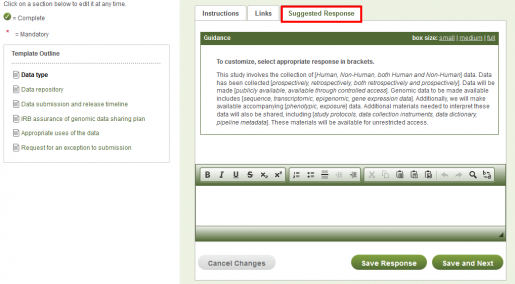
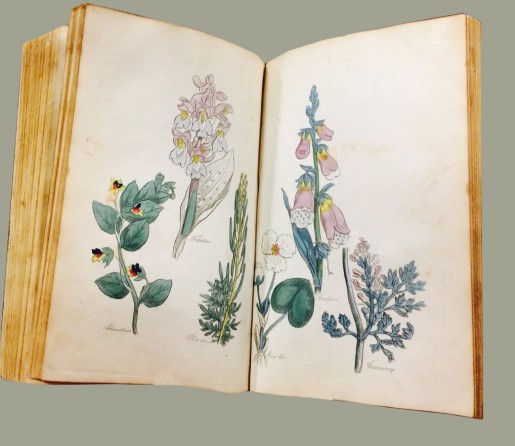 Herbals or herbaria—books describing herbs and their medicinal uses—are among the earliest literature created. They may be in the form of manuscripts, scrolls, codices, or loose sheets. Falk Library has several 18th century herbals, but the 1822 edition of John Hill’s Family Herbal is particularly interesting for three reasons: it has color plates unlike earlier herbals in our collection, it has an interesting provenance, and it was written by an author with a notorious reputation.

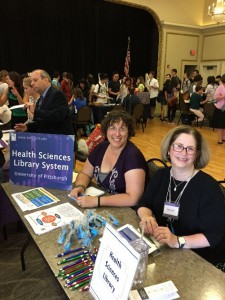
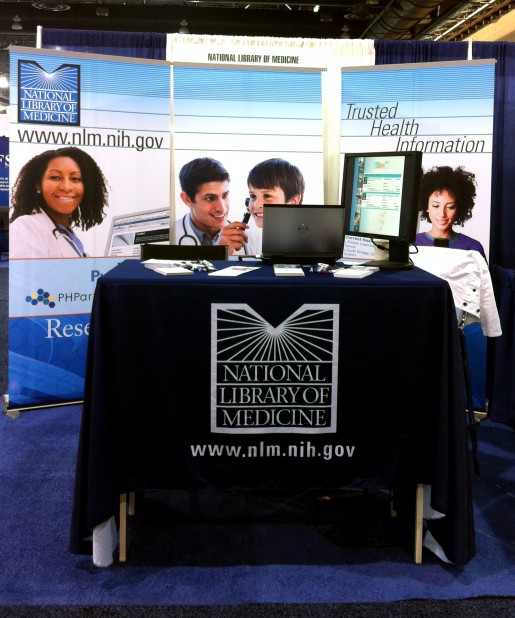 One of the ways we accomplish this is by exhibiting at national, regional, and state meetings of health professionals, public health workers, library associations, and organizations that represent consumers. NN/LM MAR librarian coordinators provide information about biomedical and health information products produced by NLM and available online at no cost.