
Important Notice: Wiley Open Access Agreement Nearing Annual Limit

Update as of October 7, 2025: The University of Pittsburgh’s Open Access Agreement with Wiley has reached its annual limit on the number of articles eligible for APC-free (article processing charge-free) open access publishing.

For questions or alternative open access options, please contact us.

***

The University of Pittsburgh’s Open Access Agreement with Wiley is very close to its annual limit on the number of articles eligible for APC-free (article processing charge-free) open access publishing. As stated on the library’s Open Access Publishing Agreements page and in the conditional funding communications from Wiley, once this limit is reached, newly accepted articles, no matter the submission date, will NOT be covered under the agreement and corresponding authors will be responsible for any invoice received from the publisher. The library’s Open Access Publishing Agreements page has noted the annual limit since the announcement of our agreement in 2024. Continue reading
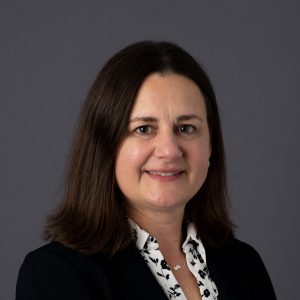
New Leadership within HSLS

Headshot of a white woman with long brownhair, wearing a dark blazer over a white shirt.HSLS welcomes Jody Wozar Larkin to our leadership team as the Associate Director for Research, Instruction, and Clinical Information Services. Jody joins us from the RAND Corporation, where she led the Library Research Services Division.

Jody began her career as a clinical nurse before transitioning into library and information services. With over 30 years of combined clinical and research experience, coupled with a record of leadership, she brings a valuable perspective to HSLS. Continue reading

New History of Medicine Digital Exhibits Available

Since the launch of our HSLS Digital Exhibits & Collections website in February, we’ve been busy adding new materials to the site for you to explore, including:

New exhibits and collections are added to the site regularly. Continue reading

Learn @ HSLS: Using ORCID and SciENcv to Create an NIH Biosketch

Join us for this class:
Tuesday, October 14, 2025, noon-1:00 p.m., Online
Taught by Stephen Gabrielson
Register for Using ORCID and SciENcv to Create an NIH Biosketch*

This interactive workshop incorporates live demonstrations and hands-on activities that walk attendees through the process of quickly creating an NIH Biosketch using data from ORCID, a unique and persistent author identifier. Attendees will gain practical experience adding scholarly works and other information to their ORCID records, connecting their ORCIDs to My NCBI, and then using SciENcv to pull ORCID data to prepopulate several sections of a Biosketch. Continue reading

Happening at Falk Library in October

Visitors to Falk Library, located in Alan Magee Scaife Hall, are encouraged to check out these opportunities and displays:

All Treats, No Tricks

Friday, October 31, from 9 a.m. to 9 p.m.

We’re bringing out all the treats for Halloween at Falk Library. Dive into our classic candy bowls with a delightful selection of chocolates and colorful sweets that cater to every craving. But the real magic happens with our themed test tubes—each one filled with decadent chocolate candy, resembling mysterious potions from a haunted laboratory. For additional thrills, our popular Historical Collection stickers are back! Grab a sticker that features a spooky figure from our History of Medicine books, some of which will be on display. Candy and stickers are provided while supplies last.

Creative Corner

New this semester! Busy with classes, presentations, reading, and studying? Visit the Creative Corner, located next to the Leisure Books section, and take a few minutes to unwind, de-stress, and explore your creative self. We offer a rotating selection of coloring supplies, puzzles, fidgets, and games to use in the study spaces throughout the library. Take them to your seat in the library and return them to the shelves when finished. Loose paper with word searches and crosswords can be taken with you. Supplies are limited and are available during all regular library hours. Continue reading

Your Library Welcomes You!

The Health Sciences Library System (HSLS) is pleased to welcome you to the 2025-2026 academic year! Our faculty and staff are looking forward to serving your research and instruction needs in the year ahead.

The HSLS Update is how we stay connected with the Pitt health sciences community. Through this monthly newsletter we share important updates, relevant news, and how-to articles. This special issue will also highlight HSLS services and resources you should know about as you start the academic year.

Here are more ways to connect with us online:


Level Up Your Research Skills With HSLS Instruction

Did you know that HSLS offers you expert instruction on a variety of topics? Our goal in offering instruction is to help you (or your students) be a more efficient, effective researcher – and this includes getting grants, analyzing your data, publishing papers about your research, and more. Whether you are staff, faculty, postdoc, resident, fellow, or student, read on to learn about what HSLS can teach you how to do.

We offer instruction covering a range of categories, including:

  • Citation Management: Determine which citation manager is best for you and then dive in with basic and advanced EndNote and Zotero classes.
  • Data Science: Organize, use, share, and increase the reproducibility of your research data.
  • Finding Literature: Augment your skills in finding the papers you need to support your work.
  • Information Literacy: Explore strategies for determining what information you should trust.
  • Molecular Biology: Learn how to use databases and software tools for your bioinformatics research projects.
  • Research Methods: Learn about research methods such as critical appraisal.
  • Scholarly Publishing & Communication: Navigate the publishing process and highlight the impact of your research.
  • Visualization & Design: Use simple tools to design posters, flyers, infographics, and scientific figures.
  • Special Topics: Explore other topics such as citizen health science, using iThenticate for grant proposals, and finding research funding.

Continue reading

HSLS Molecular Biology Information Service

As the new term begins, HSLS’s Molecular Biology Information Service (MBIS) is pleased to highlight resources designed to support data-intensive bioinformatics research across the University of Pittsburgh’s health sciences community. Whether you are launching a new project, refining an analysis, or building your programming skills, MBIS provides tools and expertise to help you move from raw data to publishable insights—efficiently and confidently. Continue reading

Navigate HSLS Resources and Services With Your Liaison Librarian

Did you know that most schools and departments in the health sciences at the University of Pittsburgh are assigned a “personal librarian,” also known as a liaison librarian? In addition to helping people affiliated with designated schools or departments, the library also has liaisons who are experts in topics like scholarly communication, data management, interprofessional education, and bioinformatics.

The HSLS website is a one-stop shop for everything the library offers, but browsing the resources and services we provide may appear overwhelming. As information experts in a discipline or domain, liaison librarians can recommend useful resources and connect you to valuable services. Continue reading

Manage and Share Your Data with Help from HSLS Data Services

The HSLS Data Services team can help you manage, publish, and share your data for any type of research project. We offer consultations, classes, and customized trainings in the following areas:

Research Data Management and Sharing

Organizing files, writing documentation, and sharing datasets for reuse are crucial practices for improving the reproducibility of research. We offer personal consultations on data management topics and teach classes throughout the semester. In particular, we offer:

  • Synchronous classes on file-naming best practices, writing data management plans for grant applications, and responsibly reusing data (or making your data available for reuse).
  • Asynchronous self-paced learning modules (including one named “Sharing Data and Code”).
  • One-on-one consultations on writing and implementing a data management and sharing plan (DMSP) for the NIH’s Data Management and Sharing Policy or Pitt’s Research Data Management Interim Policy.
  • Review of DMSPs prior to submission with grant proposals. If you write your plan using one of the templates at DMPTool, use the “request feedback” tab to get comments and suggestions (please allow us at least five business days for an initial review of your plan).

Continue reading

HSLS Scholarly Publishing Services

Not sure who to ask when you have questions about publishing? Librarians at HSLS are prepared to answer your questions, teach classes in the curriculum or lab journal clubs, and provide individual and group consultations on a variety of publishing topics.

Where to publish?

Whether you’ve published many times before, or if it’s your first time going through the process, there is much to consider when finding a suitable journal for your work. We can provide ideas for how to put your manuscript into a framework to identify relevant journals, as well as how to evaluate the quality of a journal. From understanding the different ways to make your work open access (including the Pitt libraries’ open access publishing agreements), negotiating your author rights, complying with public access policies, or publishing research outputs such as preprints, HSLS librarians are ready to help make this process easier. Continue reading

Find us on Campus at Falk Library

Falk Library of the Health Sciences offers spectacular facilities, providing study spaces, Main Desk services, a wide range of technology, the Health Science IT’s Media Production studio and Emerging Technology Lab, new and historical book collections, and rotating events and displays. Falk Library is the library for all the Pitt health sciences: Dental Medicine, Health and Rehabilitation Sciences, Medicine, Nursing, Pharmacy, and Public Health.

Location

Our location in Alan Magee Scaife Hall is central to health sciences on campus. Once you’ve navigated to the building, find the library on the Mezzanine (M) floor, just below Floor 3. If you’re coming from Lothrop Street, the lower building entrance leads you directly onto the M floor, and the library is just a few steps away! The library has regular operating hours seven days a week. Continue reading

Self-Service Technology at Falk Library

Falk Library of the Health Sciences has self-service technology available for students, faculty, and staff to use at any time during library hours.

Pitt Printers – Three Pitt printers are available within the library. One color printer and one black & white printer are located on the main level, and one black & white printer is on the lower level. Use your Pitt ID to access print jobs you have sent to the Pitt Print system.

If you need to make edits to your documents or are having trouble accessing them on a printer, simply log in at one of the nearby computer stations to access your files and send them to the Pitt printer.

Computer Stations – More than simply helping with your printing needs and providing access to anything saved to your Pitt OneDrive account, the computer stations located throughout the library have many software applications, like those listed on the MBIS software page, already installed and available to faculty and students. Continue reading

Historical Collections at HSLS

The historical collections at HSLS represent more than half of the library’s print collection and include first or limited editions of medical texts published between the 15th and 20th centuries, as well as manuscripts, scrapbooks, and local pamphlets. Research into the history of medical sciences is also supported by our circulating history of medicine books (within the Medical Humanities Collection), which include modern publications examining the past and development of medicine, medical research, and healthcare, as well as historical accounts of health professionals and hospitals. Continue reading